In April 2026, Fulbright teaching assistants in European countries had an opportunity to attend the Fulbright Enrichment Seminar, an event designed to strengthen participants' awareness of transatlantic relations, reinforce the Fulbright mission of mutual understanding, and create a space for teaching assistants to discuss, build, and enhance lesson plans and initiatives for the schools, communities, and broader public in their host countries. Fulbright Austria was represented by Justine Rozenich, who wrote an article about her experience at the seminar held in the Slovakian capital of Bratislava.
Bridging the Atlantic: 250 years of diplomacy and shared prosperity—a reflection on the 2025–26 Fulbright Enrichment Seminar in Slovakia
22 June 2026Read a recap about the seminar attended by 2025–26 US Fulbright combined grantee Justine Rozenich.
By Justine Rozenich
2025–26 US Fulbright combined grantee
Last month, I attended the 2025–26 Fulbright Enrichment Seminar in Bratislava, Slovakia, where I met fellow Fulbright teaching assistants from all over Europe. As part of America250, an ongoing initiative that marks 250 years since the signing of the Declaration of Independence, the three-day seminar was a celebration of US values, achievements, and diplomatic ties with Slovakia.

Throughout the seminar, we had the chance to hear from both US and Slovak officials and experts about the current state and future of diplomacy in the world. At this pivotal moment—amid the war in Ukraine and the rise of disinformation campaigns—many people have begun to question the longevity of democracy as a political system. Global trends moving away from multilateralism pose a grave danger to the increasingly fragile state of our democratic institutions. As the future generation of leaders, we must be prepared to tackle these challenges.
Located at the crossroads of Western and Eastern Europe and shaped by its history behind the Iron Curtain, Slovakia occupies a unique cultural and political position. As one of the few teaching assistants serving in a country located on the western side of the former Iron Curtain, I was particularly struck by my fellow teaching assistants’ experiences. Many teaching assistants working in multi-ethnic states or countries with pro-Russian leanings shared stories about navigating ethnic tensions and connecting with students who were otherwise exposed to anti-American sentiment. These experiences were much different from the challenges that I have faced during my time in Austria and opened my eyes to the vastly different perspectives on democracy and the US across Europe.
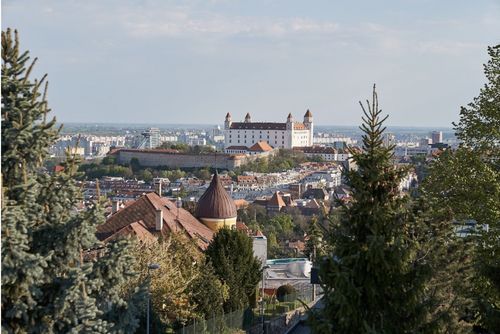 View of Bratislava from the US ambassador’s residence, where participants were invited to a reception on the final night of the seminar
During the seminar, we were assigned to groups to develop school curricula in celebration of America’s 250th anniversary. We focused on a community engagement project aimed at introducing those born outside of the US to the history of the country’s western expansion, with an emphasis on its influence on US cultural attitudes and representations in US media through the “Cowboy Western” trope. We also sought to provide greater historical context by addressing the displacement of Indigenous populations and the often-overlooked consequences of westward expansion. The enrichment sessions culminated in the presentation of our project to the representatives from the US embassy to Slovakia. It is exciting to know that our ideas may be incorporated into future Department of State engagement initiatives in local communities across the continent!
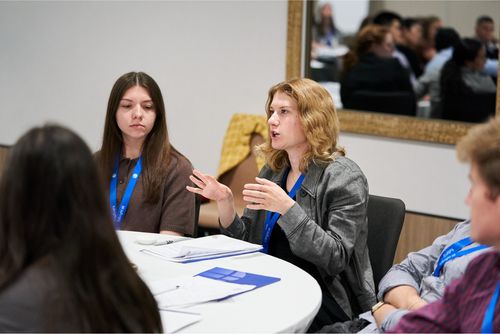 Working on the group capstone project for the America250 initiative
The history of the US-Slovak relationship and the successes that have come from this partnership highlight the continual importance of diplomacy. As two countries grappling with political polarization and growing tensions between Russia and the West, the US and Slovakia share challenges that have deepened the relevance of our relationship and underscore the importance of the role of citizen ambassador that teaching assistants occupy.
One highlight of my trip was the opportunity for cultural immersion. I had the chance to try Slovak cuisine —and I highly recommend Bryndzové halušky, the national dish, which are potato dumplings served with sheep cheese and bacon! The conclusion of our seminar on Saturday morning meant that I had the opportunity to spend some time in Bratislava on my own for the day. Exploring the city’s historic streets and blend of architectural styles reinforced many of the themes of cultural exchange and historical memory that had shaped our discussions throughout the seminar. While only an hour from Vienna, Bratislava simultaneously felt close to home and yet a world away—a reminder of how much history, politics, and culture can shape perspectives even across short geographic distances.
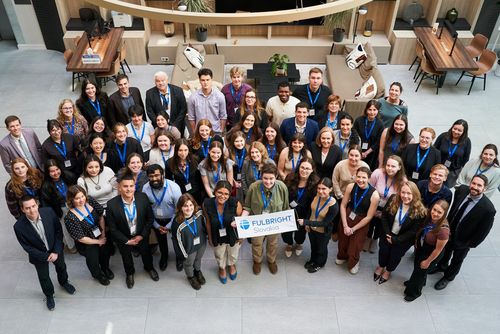 Group photo of all the teaching assistants and Fulbright scholars who participated in the seminar